If you have typed "martial arts school near me" into your phone more than once this month, you are not alone. Newtonville families have options, and that is a good problem to have. But it also means the decision takes a little more work than picking the closest dojo on the map.
We have been running a karate school in Newtonville since 1999, and before that our founder was training since the early 1980s. In that time we have watched a lot of families shop around, sign up somewhere else, and show up at our door a year later asking what they should have asked the first time.
This guide is built from those conversations. It is not a sales pitch. It is the checklist we would want our own family to use if we were starting from zero in West Newton, Newton Centre, Chestnut Hill, or Wellesley today.
Start With the Instructor, Not the Building
A nice lobby and a clean mat matter, but they are not the thing that changes your child's life. The instructor is. Before you commit to anything, find out exactly who will be teaching your child's class week after week.
Ask how long that instructor has been teaching, not just training. Someone can hold a high belt rank and still be new to actually running a room full of six year olds. Teaching kids is a specific skill, separate from personal skill on the mat.
Questions worth asking directly
- How long have you personally been teaching children's classes?
- Who is the lead instructor for the age group my child will be in?
- What martial arts system or curriculum do you teach, and why?
- How often do instructors get additional training themselves?
- Is the owner actually on the floor teaching, or mostly running the business side?
Our head instructor here in Newtonville, Master Danny Sohmer, started as a student on this very mat back in 2002 at age four, because he wanted to move like a Ninja Turtle. He has been teaching since 2012 and competed at the UFAF World Championships since 2008, bringing home two Norris Cups in 2024. That kind of long, continuous relationship with a single school is rare, and it is worth asking about wherever you visit.
Watch a Real Class Before You Sign Anything
Any school can look good for fifteen minutes during a scripted tour. What you actually want to see is a normal Tuesday class, unscripted, with real kids who have no idea you are watching.
Sit in the lobby or viewing area for a full class. Watch how the instructor handles a kid who is distracted, a kid who is struggling, and a kid who nails something for the first time. The way a school treats its weakest moment tells you more than its best one.
What good instruction looks like
- Instructors use each child's name, not just "buddy" or "guys"
- Corrections are specific and encouraging, not generic praise or harsh criticism
- Kids are moving and engaged, not standing in long lines waiting their turn
- There is a visible structure: warm-up, skill work, drilling, closing
- The energy in the room matches your family's personality
If a school will not let you watch an actual class before you join, treat that as information. A program confident in its instruction wants you to see it in action.
Understand the Curriculum and Lineage
Not every karate school teaches the same thing, even if the uniforms look similar. Ask what system the school teaches and how long that system has existed. A curriculum that has been refined over decades, with a clear belt progression and clear philosophy, tends to produce more consistent results than a style invented last year to fill a strip mall unit.
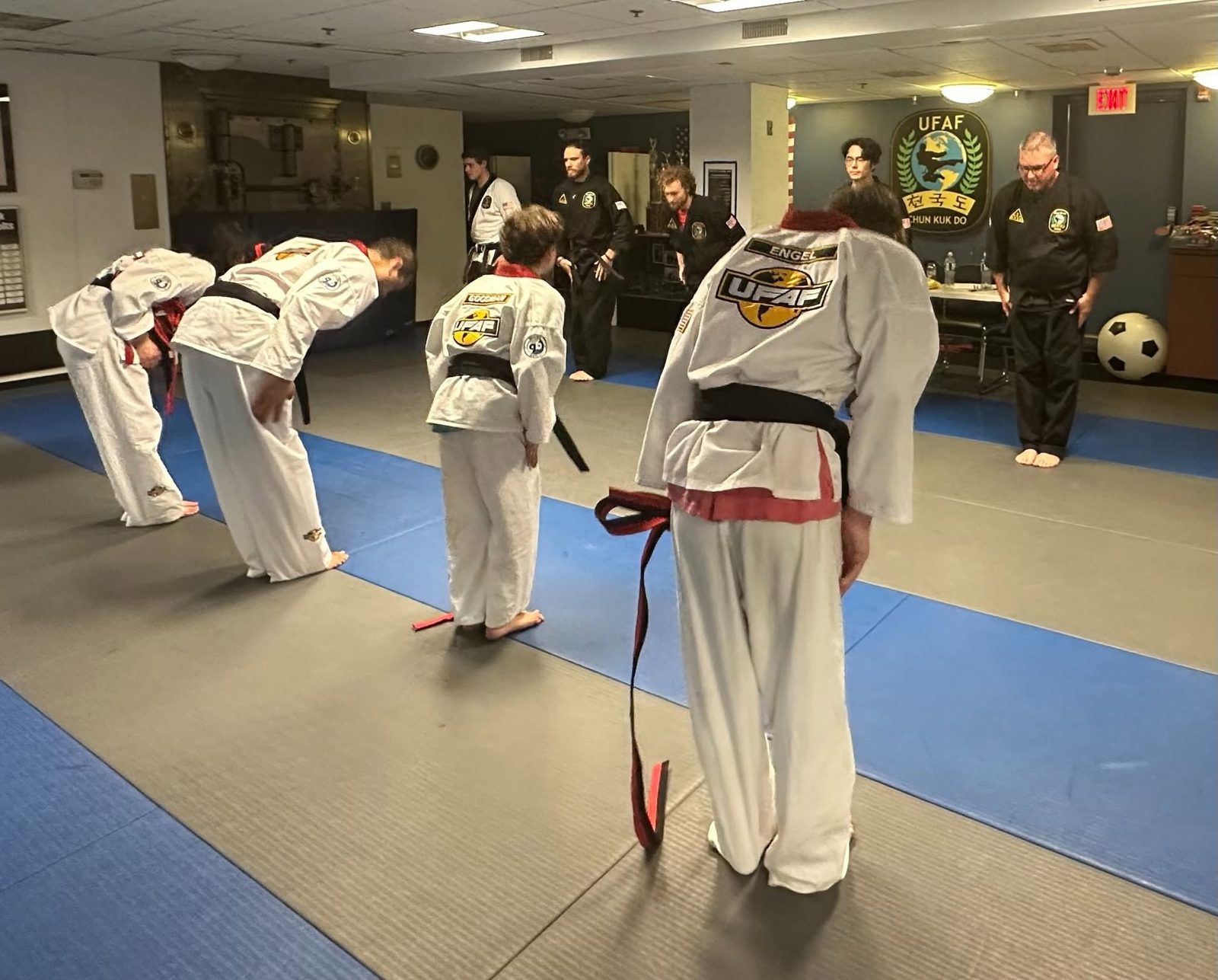
Our school teaches the Chuck Norris System, known as Chun Kuk Do, and we compete and train under the United Fighting Arts Federation, or UFAF. Our founder, Master Steve Giroux, is an 8th Degree Black Belt who has trained and taught alongside his brother Jeff since 1984 and has personally promoted more than 100 students to black belt. He is a three-time Grand Champion and Norris Cup recipient at the UFAF World Championships, won the Wieland Norris Award in 2012, and sits on the UFAF Board of Directors.
That lineage matters because it means the curriculum your child learns did not get invented overnight. It has been tested, refined, and taught to thousands of students across decades.
Read the Contract Like You Mean It
This is the part nobody enjoys, and it is the part that causes the most regret later. Before you sign anything, get clear answers on the actual terms.
Contract questions to get in writing
- What is the length of the commitment, and is there a month-to-month option?
- What exactly does the introductory offer include, and what happens after it ends?
- What is the cancellation process if your family moves or schedules change?
- Are there hidden fees for belt testing, equipment, or special events?
- What happens if your child misses several weeks due to illness or a busy season?
We keep our introductory pricing simple on purpose. Kids start with four weeks of classes and a free uniform for 49 dollars, and adults start with two weeks and a free uniform for 29 dollars. No fine print, no surprise renewal, just a real chance to see if the program fits before you decide on anything bigger.
Ask What Happens After the Honeymoon Phase
Introductory offers are designed to get families in the door. The real test of a school is what happens in month three, month six, and year two. Ask how progress is tracked, how belt testing works, and what a typical student's path looks like over a full year.
A school that can describe, in specific terms, what your child will be working on in six months has a real program. A school that only talks in vague terms about confidence and discipline, without a concrete curriculum behind it, may be selling a feeling rather than a result.
Consider the Commute, Honestly
A fantastic school across town will not help your family if getting there twice a week becomes a fight every single time. Be honest about your actual schedule. Families from Newtonville, West Newton, Newton Centre, Chestnut Hill, and Wellesley all train with us in part because the location works for weeknights after school and daycare pickup.
Convenience is not a shallow factor. Consistency is the single biggest predictor of whether a child actually sticks with martial arts long enough to see the benefits, and consistency starts with a drive that does not drain the whole family.
The Student Creed Test
One small but telling detail: ask if the school has a student creed, pledge, or set of values that students actually recite and live by, not just a poster on the wall. Our students learn and live by our Student Creed from their very first weeks in the program, and our motto, a winner never quits and a quitter never wins, shows up in how kids talk about effort long after class ends.
If a school cannot articulate what it is actually trying to instill beyond kicks and punches, that is worth noticing.
Check How the School Handles Mistakes and Setbacks
Every student, no matter how talented, eventually hits a wall. Maybe a belt test does not go well, or a technique takes months longer to click than expected. How a school handles that moment tells you almost everything about its culture.
Ask how instructors respond when a student fails a belt test or struggles in class. A strong program treats setbacks as part of the process and gives students a clear path to try again, rather than making a child feel like they have fallen behind their peers.
Red flags worth walking away from
- High pressure sales tactics during your very first visit
- Vague answers about instructor qualifications or experience
- No clear path to see a real class before committing financially
- A culture that seems to value trophies over individual student growth
- Staff who cannot clearly explain the curriculum or belt system
Ask About Community Beyond the Mat
The best martial arts schools function as more than a weekly class. They become a community families rely on. Ask whether the school hosts belt testing ceremonies parents can attend, family events, or opportunities like birthday parties that bring the whole family into the space.
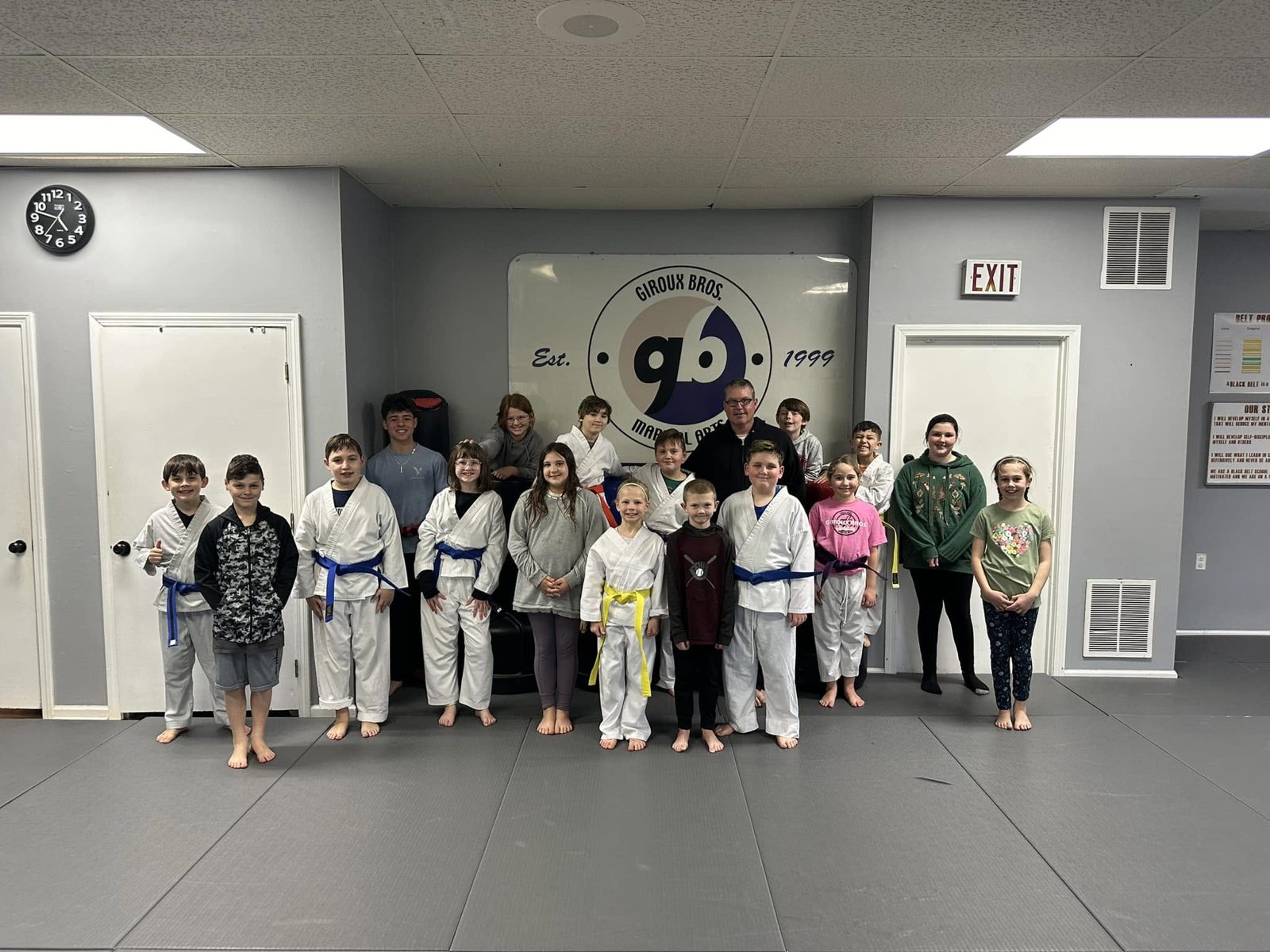
We host birthday parties for up to 15 guests for 350 dollars, and we have found that families who come for a party often end up becoming long-term students simply because they got a feel for the community first. That sense of belonging is hard to manufacture and easy to spot once you are inside it.
Frequently Asked Questions
How much does martial arts cost in Newtonville?
Pricing varies by school and program. We keep our introductory offers transparent: kids get four weeks plus a free uniform for 49 dollars, and adults get two weeks plus a free uniform for 29 dollars, so you can try the program before committing to ongoing membership.
Is a long-term contract normal?
Many schools use them, but you should always understand the terms before signing. Ask directly about cancellation policies and whether month-to-month options exist.
What age should my child start?
Most programs welcome kids starting around age four. We cover this in detail in our guide to the right age to start karate, since it depends on your child's temperament as much as their birthday.
Should I pick a school based on tournament results?
Competition success can be a signal of serious instruction, but it should not be the only factor. Our team brought home four Norris Cups at the 2024 UFAF World Championships, which tells you our coaching is strong, but what matters most day to day is how your own child is treated in class.
Can I just try a class before deciding?
Yes, and you should. Any school worth joining will welcome you to watch or try a class first. That is exactly how our intro program at /kids-karate and /classes works.
Ready to See It for Yourself?
The best way to evaluate a martial arts school in Newtonville is to walk onto the mat and watch a class with your own eyes. Visit /karate to learn more about our programs, or head straight to /contact to schedule a visit at 35 Austin Street. We would love to show your family exactly what 27 years of teaching looks like.
New Student Experience
Ready to See It In Person?
4 Weeks of Classes — $49