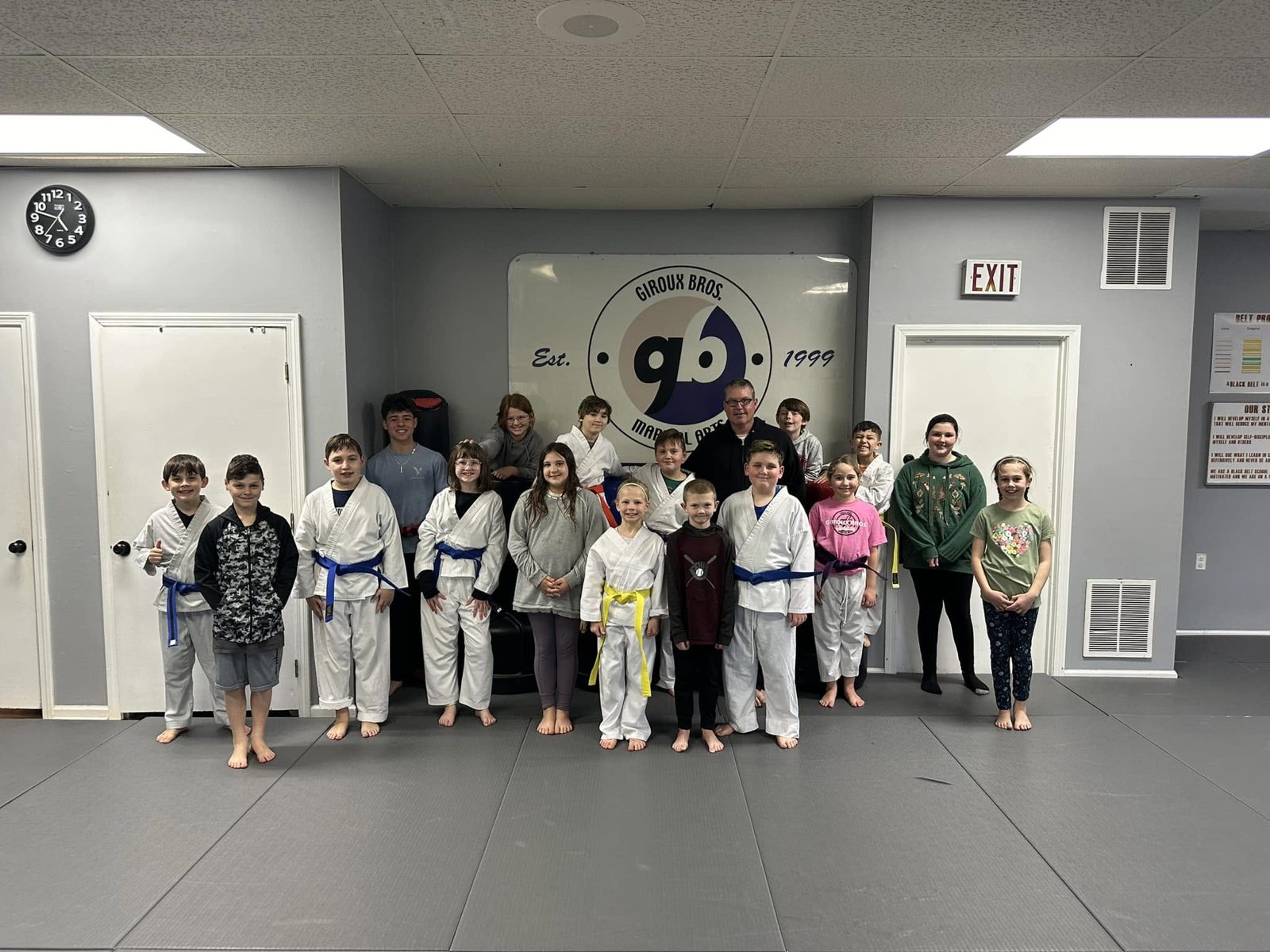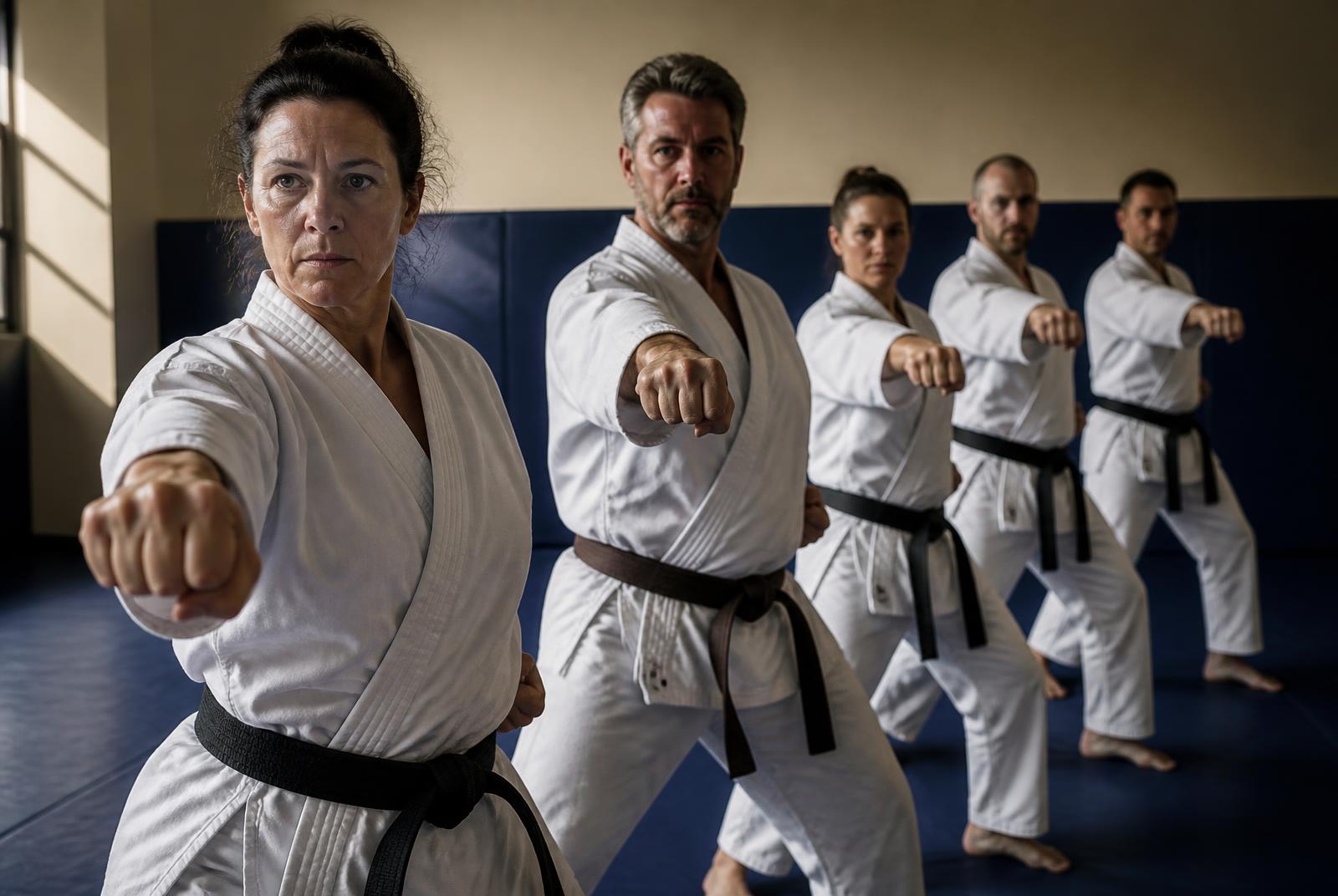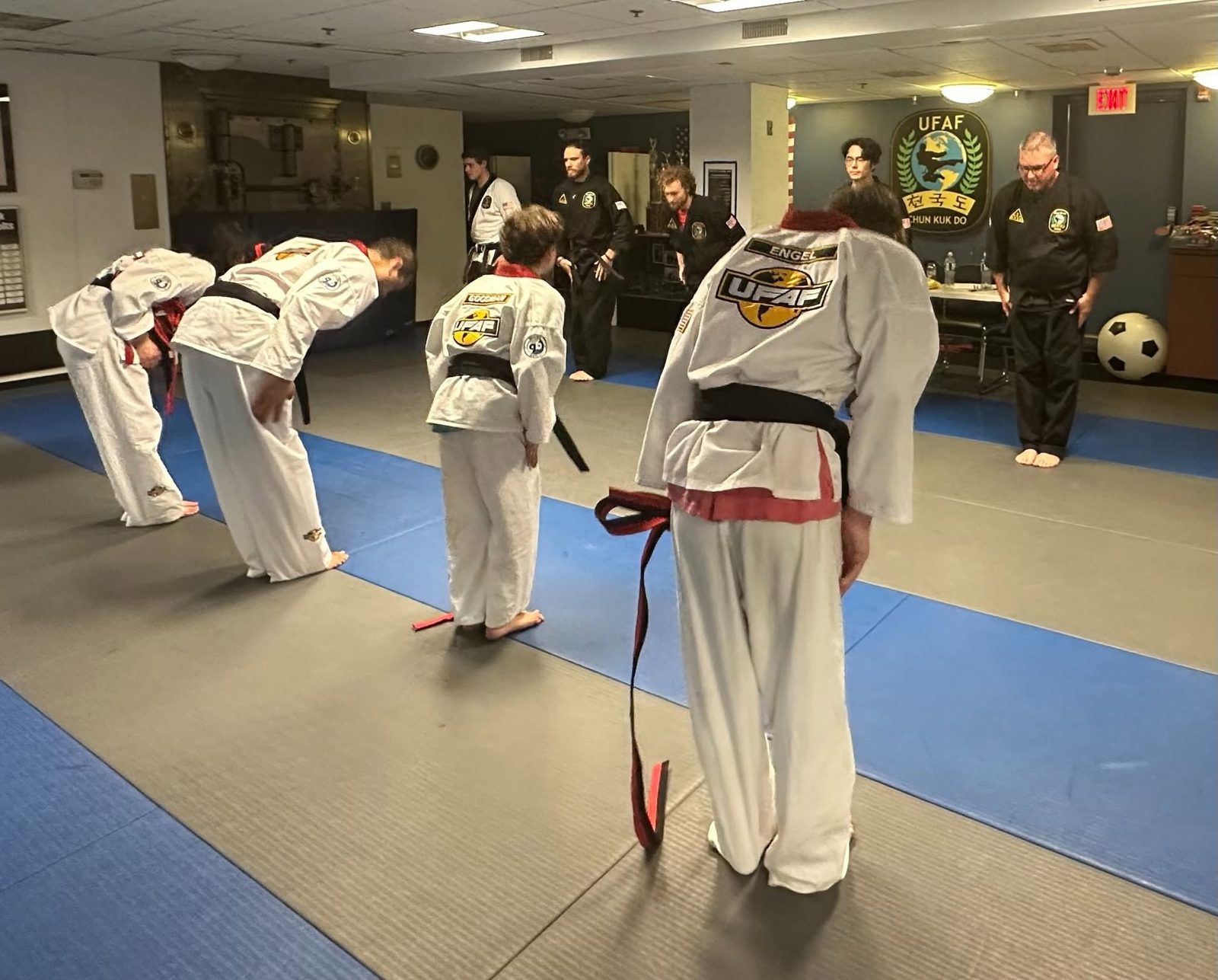
Almost every parent who walks through our doors in Newtonville mentions some version of the same worry. Their child gets pushed around at recess, struggles to speak up, or comes home anxious about a classmate. They are hoping karate will fix it.
Here is the honest truth: karate does not teach kids to fight their way out of bullying, and it should not. What it actually builds is something more useful. It builds a kid who does not look or act like an easy target in the first place, and who has the self-control to handle conflict without panicking.
This is a subject we take seriously. Our school has been teaching kids in Newtonville, West Newton, Newton Centre, Chestnut Hill, and Wellesley since 1999, and bullying has come up in parent conversations the entire time.
Why Bullies Target Certain Kids
Researchers and school counselors consistently point to the same pattern: kids who are bullied repeatedly often share certain body language, not personality traits. Slumped shoulders, avoiding eye contact, a quiet or uncertain voice, and visible anxiety all signal to a bully that a target will not push back.
This is important because it means confidence is not just a feeling. It is a physical, visible signal. And that is exactly what structured martial arts training changes first, often before a child ever learns a real self-defense technique.
Physical signals karate helps change
- Standing up straight with shoulders back during normal conversation
- Making and holding eye contact when speaking to an adult or peer
- Using a clear, steady speaking voice instead of mumbling
- Walking with purpose rather than shuffling or shrinking
Confidence Is Built in Reps, Not Speeches
You cannot tell a child to "just be confident" and expect it to work. Confidence has to be earned through repeated small successes. This is exactly what belt progression is designed to do.
Every stripe and belt a child earns represents a real skill they can now do that they could not do a few weeks earlier. That repeated cycle, struggle followed by success, builds a kind of confidence that lectures never can. A child who has stood in front of a class and performed a form from memory, even while nervous, has proof that they can do hard things.
The confidence cycle in a karate class
- A new skill is introduced and feels hard or awkward at first
- The child practices it repeatedly with instructor feedback
- The child performs it successfully in front of the class
- The child receives recognition, often a stripe or belt promotion
- The cycle repeats with a slightly harder skill
Over months and years, this cycle compounds. A child who started out unable to make eye contact during roll call can become the student leading warm-ups for younger kids.
What Our Students Actually Learn About Conflict
Despite what movies suggest, good martial arts instruction spends very little time glorifying fighting. Our instructors teach kids a clear hierarchy for handling conflict, and physical self-defense is always the last resort, not the first move.
The order we teach kids to follow
- Avoid the situation if possible; walk away with confidence, not fear
- Use a firm, clear voice to set a boundary, such as "stop, I don't like that"
- Tell a trusted adult, whether a teacher, coach, or parent
- Use physical self-defense only if genuinely cornered and unsafe
This sequence matters because most bullying situations are resolved at step two or three. A kid who can calmly and firmly say "stop" without their voice shaking is far less likely to be targeted again than one who freezes or cries.
The Student Creed in Action
Our Student Creed is not something we hang on a wall and forget about. Students recite it and are expected to live by it, both in the dojo and outside of it. Respect for others, self-control, and honesty are built directly into how we run every class.
One parent told us their daughter, who had been hesitant to speak up at school, started correcting classmates who were being unkind to someone else, simply because she had internalized the idea that standing up for others was part of being a good student here. That kind of change does not come from a single conversation. It comes from months of repetition in an environment where those values are treated as seriously as any kick or punch.
What Parents Can Reinforce at Home
Karate class is one piece of the puzzle. What happens at home matters just as much. Here are a few things we encourage parents to reinforce between classes.
Simple reinforcement habits
- Practice the "stop" voice at home as a game, not a lecture
- Praise effort and persistence, not just winning or belt color
- Ask about what was hard in class, not just what was fun
- Avoid solving every small social conflict for your child immediately
That last point matters more than most parents expect. Kids build real confidence by handling small conflicts themselves, with coaching rather than rescue. Karate class gives them a low-stakes place to practice that exact skill repeatedly.
Why Age Four Is a Good Starting Point for This
Confidence and social habits form early. Starting structured training around age four, which is when our kids program typically begins, gives children years to build these habits before the social pressures of elementary and middle school intensify. Waiting until a bullying problem already exists is not wrong, but starting earlier tends to prevent the problem from taking root in the first place.
The Difference Between Confidence and Arrogance
Some parents worry that martial arts training will make their child aggressive or overly confident in a way that creates new social problems. In a well-run program, the opposite tends to happen.
Part of our curriculum explicitly teaches students that true confidence does not need to be proven to others. A student who is secure in their own ability rarely feels the need to show off or start conflict. The loudest, most aggressive kids in a schoolyard are often compensating for insecurity, not expressing real confidence.
How we reinforce humility alongside confidence
- Higher belt students are expected to help, not show off in front of, newer students
- Instructors publicly praise effort and respect over winning or aggression
- Sparring includes strict rules around control and respect for a partner
- The Student Creed explicitly ties confidence to responsibility toward others
A Long-Term View of Confidence
Confidence built through martial arts training tends to compound over years, not weeks. A shy six year old who begins training often becomes a calm, capable teenager who can handle social pressure, speak in front of a class, or try out for a team without the same fear that once held them back.
This is part of why some families stay with us for a decade or more. The belt around a student's waist changes color over the years, but the underlying skill of handling hard moments calmly is what actually sticks.
How Belt Testing Reinforces Anti-Bullying Skills
Belt testing is not only about technique. Students are also evaluated on composure under pressure, which directly mirrors the composure needed when facing a difficult social situation like a bully.
A student who has stood in front of an audience during a belt test, managed nerves, and performed anyway has practiced the exact emotional skill needed to stay calm when a classmate is unkind. We see this connection play out consistently across years of testing cycles.
Skills belt testing builds that transfer directly
- Staying calm and focused while being watched by others
- Recovering quickly after a small mistake without giving up
- Following through on a goal set weeks or months in advance
- Accepting feedback from an instructor without becoming defensive
A Note on Social Media and Modern Bullying
Bullying today often extends beyond the schoolyard into group chats and social media, and physical self-defense obviously has no role there. What does transfer is the same underlying confidence and self-respect we build on the mat.
A child who feels secure in who they are, built through months of earned progress in class, tends to handle online conflict with more perspective and less emotional spiraling than a child whose only sense of self-worth comes from peer approval.
Frequently Asked Questions
Will karate teach my child to fight back physically?
Physical self-defense is part of the curriculum, but it is taught as a last resort after avoidance, boundary-setting, and telling a trusted adult. The goal is prevention, not escalation.
My child already seems confident. Is karate still useful?
Yes. Confident kids benefit from structured discipline, goal-setting through belt ranks, and learning respect and self-control alongside their existing confidence.
How quickly will I see a change in my child's confidence?
Most parents notice small shifts, like better posture or eye contact, within the first month. Deeper changes in how a child handles social conflict typically build over several months of consistent training.
What if my child is currently being bullied right now?
Karate training can help build long-term confidence and skills, but it should be paired with directly involving the school and other trusted adults in an active bullying situation. We are always happy to talk through this with parents directly.
Does this program also help with general shyness, not just bullying?
Absolutely. Many families join us for general confidence-building rather than a specific bullying concern, and the same structured confidence-building approach applies.
Give Your Child a Real Foundation of Confidence
Confidence that actually holds up under pressure is built through practice, not promised through a pep talk. Visit /kids-karate to learn more about our children's program, or contact us at /contact to schedule a visit and see a class in action at 35 Austin Street in Newtonville.
New Student Experience
Ready to See It In Person?
4 Weeks of Classes — $49